Abuse of Office in Hargeisa: The Dangerous Precedent of State-Sanctioned Commercial Interference.
Somaliland’s remarkable post-conflict recovery was not built on massive foreign aid or state-run monopolies. It was forged on an unwritten social contract between a resilient public and a government that pledged to respect private enterprise, uphold the rule of law, and foster a transparent environment for trade.
That foundational promise, which turned Hargeisa and Berbera into dynamic engines of commerce, is now being directly undermined from within the highest corridors of power.
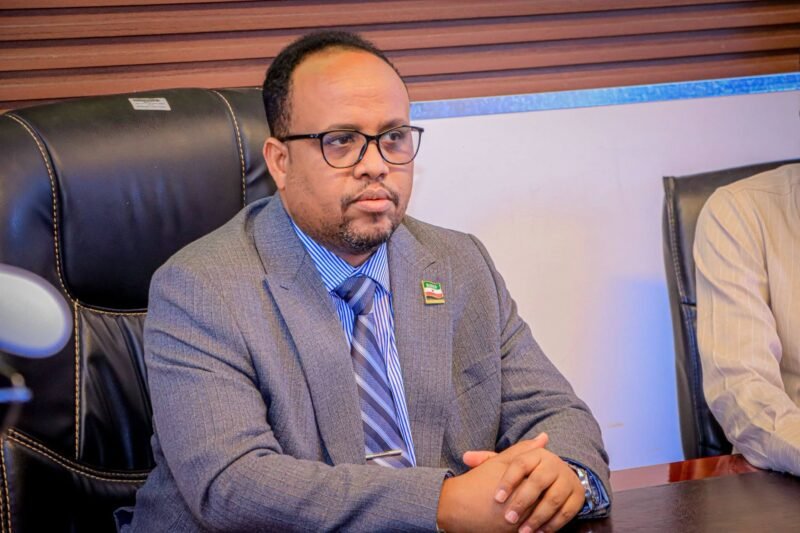
The recent conduct of the Minister of Trade and Tourism, Mr. Abdirahman Hassan Nur, represents a alarming departure from the principles of responsible public governance.
Instead of acting as an impartial steward of commerce—working to lower barriers, streamline regulations, and attract investment along vital trade corridors—the Ministry is increasingly being used as a personal instrument for market distortion, executive intimidation, and predatory overreach.
The Danger of Executive Encroachment
When a public official tasked with overseeing trade uses the weight of state authority to interfere in private commercial ecosystems, the entire market suffers.
Reports circulating within Somaliland’s business community paint a troubling picture of a ministry operating far beyond its statutory mandate. Rather than fostering a level playing field, the current leadership has created an environment where private enterprise exists at the whim of executive favor.
When state mechanisms are weaponized to pressuring established commercial operations, the consequences ripple across the entire national economy. A healthy economy depends on predictability. The moment private business owners must worry about administrative harassment or coercive state interference, confidence evaporates.
A Conflict of Interest at the Core of Governance
Public office is a public trust. A Minister of Trade is appointed to serve the national interest, not to engineer private commercial advantages or build personal corporate footprints while in office.
The expanding private holdings associated with Minister Abdirahman Hassan Nur during his tenure, combined with persistent allegations of opaque asset management, highlight a deeper systemic failure.
When clan-based patronage and executive influence override merit, professional ethics, and judicial oversight, state institutions cease to protect the public—they become tools for self-enrichment.
Erosion of Investor Confidence: International logistics firms, regional investors, and domestic capital require absolute legal certainty. If the Ministry of Trade becomes synonymous with arbitrary interference, foreign direct investment along key transit routes will stall.
Erosion of the Rule of Law: Using state apparatuses to pressure private market actors sends a dangerous signal that regulatory compliance can be bypassed whenever executive authority demands a seat at the table.
Capital Flight: When domestic entrepreneurs realize their success makes them targets for administrative harassment, they naturally seek safer, more predictable jurisdictions for their capital and talent.
Restoring the Integrity of the State
Somaliland cannot afford to let the personal ambitions of a single cabinet member dismantle thirty years of hard-won economic trust. The Republic’s reputation as a stable, open, and law-abiding jurisdiction is its greatest asset on the international stage.
To protect the national interest, executive leadership must draw a clear line against ministerial overreach. The Ministry of Trade must be restored to its proper function: a regulatory body dedicated to upholding free trade, protecting private property, and serving every entrepreneur with fairness and impartiality.
Allowing predatory governance to take root in Hargeisa and Berbera is a risk Somaliland simply cannot afford.